Labels: Architecture, Armenian Churches, Nature, Personal Experiences, Photography, Travel

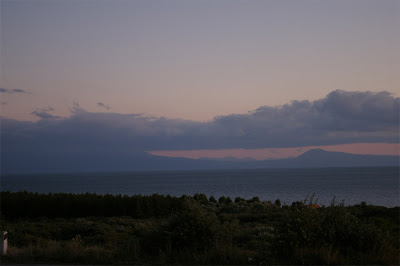
The steep hills of northern Lori are carpeted with rich, pristine forests of oak, maple, walnut and countless other deciduous species. Rivers and seasonal rains in tandem help irrigate the soil and provide the proper conditions for regeneration. The farther north you drive, so little the landscape changes. The hills turn into mountains of modest heights. On top of them may be flat, grassy plateaus laced with wildflowers. The road that leads north cuts through a narrow valley that only expands in earnest in Alaverdi. If you decide to continue your journey toward the Georgian frontier the hills gradually become lower, but they ascend upward in the distance in a wavy pattern that induces a feeling of tranquility upon the beholder. Lori is a paradise for any lover of nature, particularly of thick, thriving forests.
Indeed, I have visited few places in Armenia that have given me such peace and warmth as northern Lori. To get there you must travel through Vanadzor via Spitak or optionally Dilijan, although that route is longer. The stretch of road from Yerevan to Spitak through Aragatsotn is a two-lane highway which has some bends and deceptive crooks but is more or less wavy, with some straightway sections of road. Once you cross the Lori border, however, you enter a new world of valleys and seemingly endless slopes. The road that descends towards Jrashen and onwards to Spitak has a few hairpin curves but the scenery is breathtaking, especially in winter when the hills are blanketed with snow. For nearly 50 minutes you drive just below the base of the magnificent Mount Aragats crowned with four peaks on your left. You will pass through several Yezidi villages along the way, namely Ria Taza, Alakyaz and Jamshlu. The plains of Aragatsotn just north of Aparan are expansive and nearly seem endless, until you drive another 10 kilometers and the landscape transforms. Most of the ride is a wavy, twisting journey as is the case anywhere you venture in Armenia, save for the Ararat valley, which is the flattest area of land in the entire country.
Even in the midst of summer Lori can be quite cool. Then again, this year’s summer months have been quite unusual to say the least. Yerevan has been haunted with rains and chilly evenings for months, as if the spring never ceased. The air in Lori is never still, there are always lovely, inviting breezes to flirt with you, they manage to entice a smile from the roughest looking visitor.
Our destination was the “Lori Rest House,” which is located not far from Vahakni in the obscure village of Shahali. Anush had been there twice before and recommended that we stay there, which I was enthusiastic about doing. To get there while driving north towards Alaverdi we turned right at a sign marked “Gugark Children’s Camp” to cross a short bridge over the Debed River. Having past the camp’s entrance on our left we continued along this steady uphill road, which was for the most part eroded and at some places very rough going. After about three kilometers we arrived at the compound, a five-story “rest house,” which is a leftover Soviet term for a modest, no-frills hotel. The place was completely surrounded by steep forested slopes. There were all sorts of trees in the area, some of which must have been deliberately planted. One tree on the grounds resembled a Japanese maple for instance. The river Dzoraket runs through the area, and the climate was very humid, although not as high as it is down in Meghri. The place was simply gorgeous, and as soon as I arrived I was inclined to stay for days. The rooms were small but clean, unpretentious with bare walls, and two narrow separate beds. The bathroom was in immaculate condition, as the place was recently renovated. I couldn’t manage to join the beds for my wife and I to sleep together because of their awkward design and their sturdy wood construction. Shortly we arrived I crashed for about 30 minutes having been intoxicated by the fresh, fragrant air. It makes you drowsy periodically throughout the day and the frequent need to nap is futile to resist. We laid down together snugly on one of the beds without turning up the wool blanket which was folded lengthwise. By evening I realized that the bedding was reeking with the pungent stench of mold. It wasn’t until I was actually trying to sleep that I gathered how strong it was, it was deep-rooted in the bedding. The smell kept me awake, so I was obliged to hit the carpeted floor wearing jeans and a light cotton sweater to keep warm with a folded towel under my head. The next morning we persuaded the housekeeper to show us another room across the hall, but although the blanket and bedding seemed odor free, the box spring thoroughly smelled musty. It is with much regret that we couldn’t stay there longer simply because my allergies could not cope. In the presence of mold my sinuses start to fill up and my throat feels like it is closing ever so slightly.
The “Lori Rest House” is a wonderful place to relax—there are no tourists and virtually no “rabiz” people there to spoil your spirits. One person pays 8,000 dram a night ($22), and the price includes three meals. Unfortunately, we alone, apart from the other guests that didn’t seem to number more than 50 in total, were unlucky with the accommodations, otherwise we would have stayed there for several days. Despite my experience I recommend the “Lori Rest House,” but with reservations.
A word of caution—if you have an aversion to mold, ensure that the bedding of any hotel you visit in Lori smells fresh. Unfold then shake out the blanket and sniff the pillow as well as the mattress for any hint of must before you pay for the room. The Armenian term for “humid” (pronounced khonav) seems to take precedence over the word for “mold” (borbos) from my experiences. Someone may try to convince you that the room is just humid, and firing up a portable, yet highly dangerous electric cooking plate that they will provide for a few minutes will solve the problem. No one wants to admit that their furnishings are musty, I suppose. But no matter where you go, you’re bound to run into mustiness of some degree—just make sure that the scent is not overpowering.
When we reached the main road we made a left and headed back in the direction of Vanadzor to visit the “Anush” restaurant and motel, located just outside the village of Vahaknadzor. I stopped there with Anushig and her friend Lilit on a day trip last year for lunch while on our way to visit the Sanahin and Haghpat monasteries. One of the travel books that I have, given to me last year by someone visiting Armenia, mentioned that the place offered rooms. There are four units available, constructed in a loft architectural style, so the sitting room and large outdoor balcony is on the first floor while the bedroom and bathroom are on the second, accessible by a wooden spiral staircase. The conditions were more or less the same as those of the rest house—clean, cozy and well kept, but with a bit more pizzazz and a discernable homey feeling. These parts of Lori however do have their fair share of spiders, so you may find one waiting in his web in a corner of the room or by the window. This seems to be a normal expectation, it should not be considered a sign of uncleanliness. It is considered bad luck to kill or chase out spiders from a home, which explains their presence. Even in my own apartment I don’t dare to get rid of them.
The “Anush” motel is perched just above the Debed River, which is only about 100 feet or so below. The sound of crashing water is very soothing, and it lulls you to sleep after only a few minutes. At times with the slight humidity and light breezes I felt as if I was by the seaside. The view of the forested hills that seem to roll on forever is spectacular. The cost is 10,000 dram ($27) for the unit, excluding meals. You can order tasty food from the restaurant and enjoy it from your balcony if you wish, but the restaurant is literally 10 feet away and you will have virtually the same view if you dine on the veranda. You will eat very well there, expect superb meals and friendly service.
During your stay in a modest hotel, do not expect to have fantastic, soothing showers. Often the experience makes you feel like Inspector Clouseau while you fumbling about looking for a place for your toiletries, trying to find the right amount of hot water to stand under or figuring out why the water is trickling from the showerhead. If sandals are provided do not use them, there’s no telling how infested with fungus they are. Take one of the dozen cellophane bags that you have unwittingly managed to collect during your journey, rip it lengthwise and lay it on the tile floor to stand on. It is not unusual to find a shower nozzle hanging by an aluminum-coiled hose from the sink in the bathroom that you are expected to use successfully. If you are fortunate there will be a clip on the wall where you can fasten the shower nozzle while the lukewarm (or hot if you are lucky) water dribbles on your head. The water drainage can be an issue as well—expect lingering puddles on the floor that you cannot soak up because there is no mop provided.
Finding a place that serves breakfast is always a predicament in Armenia, even in the capital. Although the “Anush” motel is literally three feet away from the restaurant, you cannot eat a meal there before 1:00 pm at the earliest. A place a few kilometers down the road that oddly advertises both apples and meals on its signs is no longer in business. We then decided to try the Tufenkian Avan Dzoraket hotel, which was not too far away. There we were fed like royalty, with several breakfast meals to select from, along with cheeses, cold meats, farm-fresh yoghurt, walnut preserves, coffee and juice included. The omelet portions that we were served were quite generous and very satisfying. Although the meal cost 3,000 dram per person it was well worth it, considering the high quality not to mention abundance of the food and the professional, courteous service.
If you are fascinated by the construction and architecture of Armenian churches, especially those built on top of rocky ledges or high up in the forested hills where it seems no tuf or basalt stone used for erecting them is within reach, and wonder what the interior might once have looked like, go to Akhtala. The Amaras complex, which consists of the fortress constructed in the 10th century, and the Akhtala Church of the Holy Madonna, or Surb Astvadzadzin in Armenian, is located about 15 or 20 kilometers north of Alaverdi. Akhtala is not only special because of its architectural triumph, perhaps even more important is the fact that the original frescos painted on all of the interior walls when it was constructed in the 13th century remain in remarkable condition. The paintings virtually cover the entire walls, all the way to the top where they meet the ceiling, on which signs of damage from the elements are clearly evident. The portraits of saints and stories from the Bible that are all depicted on the walls are very good or else in excellent condition when taking into consideration how old they are, and the technical skill of the artist is remarkable. Remember that these illustrations were made before the times of Giotto, the pre-Renaissance Italian master of fresco painting, but the skillfulness employed by the painter in Akhtala arguably rivals his work. Nevertheless, perhaps that should best be left to art historians to determine.


There’s only a few churches in which frescos are still visible, one of them being in Meghri, also quite magnificent, and another in Kobair, which is also in Lori but there is no paved road leading to it. I noticed that there was no Armenian at all written anywhere inside Akhtala, even the tombstones, on which Georgian and Russian script was legible. The caretaker told me that in those times it was an accepted practice to use Greek when printing passages from the bible on the walls or any text for that matter.
I will only say a few words about the Haghpat, Sanahin and Odzun monasteries since so much has already been documented about them, especially the first two. Simply put, they are sublime, exquisite masterpieces of architecture, artistry and faith that any visitor to Lori must make a point of seeing. It would be a sin to not frequent any one of those sites, as they are truly amazing spectacles to behold. Find and chat with the priest at Odzun, an inspiring, spiritual man in his late twenties who is dedicated to the preservation and restoration of the church and the surrounding compound.
After leaving Lori we decided to drive through Tavush for a short while. We had a nice light meal of tomato and cucumber salad and a tasty, deep-fried ring of thin river fish reminiscent of sprats at the Getap restaurant situated on the road leading from Dilijan to Ijevan, where you can sit outdoors, riverside. Service is a bit slow there so expect to take a long lunch. Then we traveled onward to Ijevan, a sleepy town where streets are lined with tall coniferous trees. In the center of town is a great open market that was once more charismatic than it was when we visited there. The vendors there sell all sorts of grapes and abundant produce grown in the area.
Then back in Dilijan we stopped in the new Tufenkian compound where an inn and several shops are located. The price they quoted for a room accommodating two people was 40,000 dram, very high considering that you can stay at their Lake Sevan resort for around 28,000 dram per night with three meals included. We were pondering to stay in Dilijan for the night but decided against it, believing that going to Tsakhadzor would be a better option. Although plenty of hotels are available with rooms for around 10,000 to 15,000 dram per night there as special off-season rates (Tsakhadzor is a winter resort town) we wanted to stay someplace on the cheaper side. If you don’t mind quaint, rather bland, unpretentious lodging, try the Painters’ Guest Home in the middle of town. It is a two-story green house located on the right corner where Charents Street joins the main square. We were shown a room on the second floor that was fairly large but overcrowded with furniture. The shower was fairly decent, certainly the best that we had during our journey. But the room itself was a bit dark and drab. All things considered, it was not all that bad at only 8,000 dram per night for a couple.
One last point about small, affordable hotels—they are not necessarily 100 percent dust free. Housekeepers, despite the availability of vacuum machines and other modern cleaning devices, are obliged to clean the old-fashioned way—using a straw broom gathered and tied by an old women in the village, a small dustpan, and an old, damp rag wrapped around the T-shaped end of a long wooden handle. The only explanation I can think of for continuing to employ these methods is that hotel owners do not see the necessity to invest in more efficient procedures of housecleaning. Needless to say, these implemented cleaning tools are not very effective at all. Also, wiping dust from furniture and window sills and removing grime like smashed mosquitoes off tiled bathroom walls are accomplished infrequently for some unknown reason. Based on my experiences of the last four days, this seems to be the norm. I am assuming that cleaning practices are a bit more detail-oriented in higher-priced hotels, but I am not certain. I will say, however, that the Tufenkian chain of hotels and resorts is top-notch and you will certainly not find any lack of cleanliness issues there. They are perhaps the best lodging establishments that you can stay in throughout Armenia.
When in Armenia, take a couple of days to explore the wonderful sights, smells and nuances that Lori has to offer. They will be indelible experiences that you will cherish for a lifetime. Incidentally, apart from Lori, I also prefer the south, particularly the magical region of Syunik. Kapan has a rather nice hotel in the center of town alongside the river to stay in. Goris is a gorgeous place to visit but I have yet to spend the night there. Just be sure to stay out of Yerevan as often as you can possibly manage to truly absorb and appreciate what Armenia is really all about.

Labels: Architecture, Armenian Churches, Nature, Personal Experiences, Photography, Thoughts and Musings, Travel
The expenses associated with farming have skyrocketed in recent years. The price of a 50-kilo load of fertilizer virtually doubled from 4,000 dram in 2008 to 8,000 dram this year. Electricity, which is essential for farmers pumping water from artesian wells, has also increased since last year from 25 dram to 30 dram per kilowatt. The cost of water has gone up by approximately 30 percent. And to have one hectare of land tilled with a hired plow, a farmer is obliged to pay up to 45,000 dram for the job.
There have been times when local governing authorities have put pressure on Virab by extorting bribes.
“They would shut off my electricity and cut off the water supply, so I’d pay them off to keep going,” he said. “The government doesn’t let you work, they don’t want to see you take more for what you’re giving to the land, for what you’re producing while breaking your back, for your own livelihood. They want a slice of the pie, too.”
***
In Yerevan, Mgo sells mostly peppers, onions and, especially, cucumbers, piled in four rows about two-feet long at his stand behind the Gomidas Street market. The fruit and vegetable merchants sell their produce in the lot behind the building, which is now used mainly by vendors selling various products made of dried fruit.
The Russian cucumber variety sells for 300 dram—or 81 cents at the current 370 dram-to dollar exchange rate— which Mgo buys for 180 dram. The Armenian sort that he buys at 350 dram from a village nearby Etchmiadzin sells for 400 dram. He insists that it is top quality.
“Business is very bad this year,” he says while frowning. “It’s due to the bad weather. This year there weren’t many cucumbers. I’m managing but barely.”
Anahit sells various vegetables along the sidewalk in front of the Gomidas market. Whenever anyone walks by she entices them to buy her eggplants, tomatoes, and peppers, all of them plump, fully ripe, and glistening.
“I buy tomatoes for 150 and I sell them for 200. Cucumbers that I buy for 250 I sell for 300,” she says disappointedly. “By the end of the day I’m left with between 2,000 and 3,000 dram in my pocket, that’s all. It’s tough.”
Labels: Economy


Sergey Minasian stood in as my father, while his wife Nelli, my surrogate mother, was unfortunately in the hospital. Other friends who turned out included Shari Melkonian from Boston, who now lives here and works as the country director for the Armenian Volunteer Corps, and Ani Tchaghlasian along with her husband Hagop. Several friends from my workplace were also in attendance. My “kavor” or best man was Loris Lalayan, whom I’ve known since 2002 when we were employed at a software company here. He’s a fantastic, warm guy who I value very highly as a true, dedicated friend.


The church ceremony at St. Gayane started about 20 minutes late. At least two weddings were held before ours, but at the time I ran into a slight panic thinking that someone else had taken our place. Then it dawned on me that the schedule was set at Armenian time, so we roamed the church’s surroundings in the meantime, inspecting the graveyard and trees. The “tamada” or master of ceremonies showed some of us the grave of Khent, the real-life protagonist of Raffi’s novel of the same name.


Our reception was held at ARMA Hotel and Restaurant, which is located in Nork-Marash. We chose to hold the party on the patio under the green canopy they have in place there. The food, ambience and service were all fabulous. I must have drunk at least three liters of the five jugs of wine that I personally fetched from Haigaz’s wine cellar down in Areni about 10 days ago. I purchased 30 liters, all of which was consumed by the guests along with the Russian “Green Mark” vodka. The dry wine was superb, aged for three years. Despite forecasts calling for a 60 percent chance of rain the outlook was rather sunny, although by evening a thick mass of foreboding clouds moved in from the south. But no rainout, thankfully. Had there been rain it would have been a disaster, a complete washout since the canopy has worn a bit thin.
The band assembled by David Minasian performed traditional Armenian music with depth and feeling, and they managed to energize the guests quite nicely. Everyone I spoke to was very pleased. I thought the band was amazing personally. They performed all the popular folk songs that I grew up listening by sheer chance. Among the extremely talented musicians was Vardan Grigoryan of the Armenian Navy Band, who played duduk, clarinet and I think zurna at one point—can’t remember all that well since I was pretty drunk. Actually my memory of most of the night is fuzzy, or maybe hazy is a better word. Too much revelry does that to you I suppose.
The photos posted here taken at church are by Lilit Manucharyan, while those at the reception were shot by Soseh Hovsepian, who is a friend from work. Others pictures that were taken by a semi-professional photographer at church we will not see for two weeks, which is odd. Virtually zero portrait photos exist of me and Anush since no one with a camera bothered to take them for some bizarre reason, so we’ll most likely get dressed up this weekend to have some shot by my good friend Karen Minasian (Sergey’s son), who is a professional photographer.
Anyway, I am thankful to all the guests who attended the wedding to share this special, memorable day with us. Despite a hangover that lingered for about two days it was certainly one of the best days of my life. The only people missing to share in our joy were my parents, Khosroff and Linda, and their presence was missed by many, including Sergey who knows them personally and my mother-in-law Klava, who is naturally very eager to meet them. Nevertheless, they were with us in spirit.
I wish the party didn’t end so soon. I’m looking for an excuse to have another one.
Labels: Personal Experiences, Photography, Thoughts and Musings